The Twin Cities Small Venue Guide: Where the Scene Actually Lives
The Twin Cities Small Venue Guide: Where the Scene Actually Lives
Everybody knows First Avenue. It has a wall of stars, a movie, and a reputation that reaches a lot further than Minnesota. But if First Ave is the only room you know, you are missing most of what makes this scene one of the best in the country for its size.
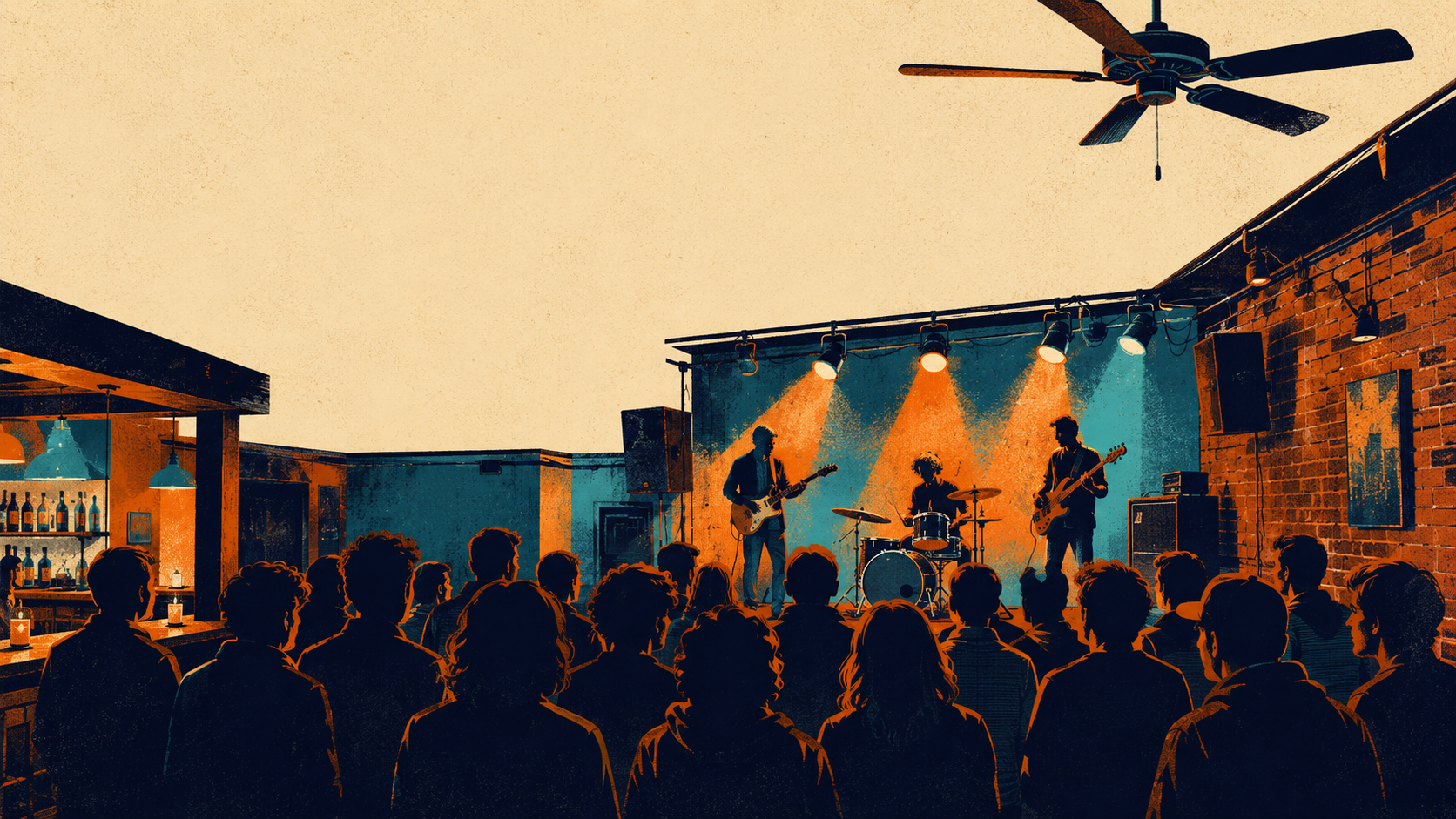
The Twin Cities has an unusually deep bench of small rooms. Places where a touring band plays to 90 people on a Tuesday, where a local act works out a new set, where three bands you have never heard of cost you twelve dollars and one of them turns out to be your new favorite. That layer is the actual engine of the scene, and it is a lot easier to navigate than it looks.
Here is how the rooms break down.
The 100 to 200 capacity rooms
This is where most local bands start, and where the ticket price is usually somewhere between free and fifteen dollars.
7th Street Entry is the small room attached to First Avenue, and it is the single most important small stage in the state. Bands that sell out arenas ten years later played the Entry first. It runs a mix of touring openers and local bills nearly every night.
The Turf Club in St. Paul is a Midway institution. Old neon, a low stage, the Clown Lounge downstairs. Indie and rock heavy, and one of the best sounding small rooms in either city.
Icehouse in the Whittier neighborhood leans jazz, experimental, and singer-songwriter, often with a seated dinner crowd early and a looser show later.
The White Squirrel Bar on West 7th is about as unpretentious as it gets. Free shows, folk and country and punk, several nights a week.
331 Club in Northeast runs a rotating slate of free early shows. Show up, order a beer, see what happens.
Mortimer's in Lyn-Lake and Eagles Club 34 in Elliot Park both fall into the same bucket. Cheap, loud, local first.
If you are trying to actually understand the scene rather than just attend a concert, this tier is where you spend your time.
The 250 to 600 capacity rooms
Big enough that touring acts route through them, small enough that you are never far from the stage.
The Cedar Cultural Center in the West Bank is a nonprofit listening room with a global music focus. Seated or standing depending on the show, and the sound is excellent.
The Hook and Ladder Theater in Longfellow is a converted firehouse that runs everything from roots to psych to hip hop, plus an outdoor stage in the summer.
Fine Line in the Warehouse District is the classic mid-size club downtown. Balcony, big stage, wide booking.
Amsterdam Bar and Hall in downtown St. Paul does punk, metal, indie, and a lot of local bills, with a bar side that runs free shows independent of the main room.
Berlin in the North Loop is a newer jazz-forward room with a serious cocktail program and late sets.
Green Room in Uptown runs multi-band local bills most weekends.
James Ballentine Uptown VFW is exactly what it sounds like, a VFW post that also happens to book a genuinely good rock and punk calendar.
The larger rooms
First Avenue Mainroom, the Palace Theatre in St. Paul, the Fillmore Minneapolis, Varsity Theater in Dinkytown, The Armory downtown, Skyway Theatre, and the Dakota for jazz and soul. These are where the touring circuit lands. Great shows, but you are usually buying a ticket weeks out for an artist you already know.
How to actually find the shows
The hard part in a scene this deep is not that there is nothing to do. It is that on any given Friday there are forty shows and no single place that lists them all. Venue calendars are scattered across a dozen websites, half of the small rooms announce on social media only, and the ticketing platforms only show you what they sell tickets for. Free shows at the 331 or the White Squirrel do not show up on a ticketing site at all, because there is nothing to sell.
That gap is the reason we built Gig Scout Live. Every show in the metro in one filterable feed, including the free ones, sortable by city, date, genre, and venue. You can follow the venues and bands you care about and see what they are doing without checking nine different calendars.
A few tips for the small rooms
Doors and set times are different things. A show with 8pm doors usually means the first band starts around 9. If you only want the headliner, ask the bar or check the venue's post.
Bring cash for merch. Most bands take cards now, but cash goes straight to them without a processing fee, and merch is where a touring band actually makes its money.
Get there for the opener. In a room of 120 people, the opener notices who showed up. So does the scene. This is the single best habit you can build if you want to feel like part of something rather than a customer.
Tip the sound engineer if there is a jar. They are the reason the show sounded good.
Start somewhere
You do not need a strategy. Pick a Thursday, pick a room from the first section of this list, and go see three bands you have never heard of for the price of a sandwich. That is the whole thing.