How Local Bands Actually Get Paid: Door Deals, Guarantees, and Splits Explained
How Local Bands Actually Get Paid: Door Deals, Guarantees, and Splits Explained
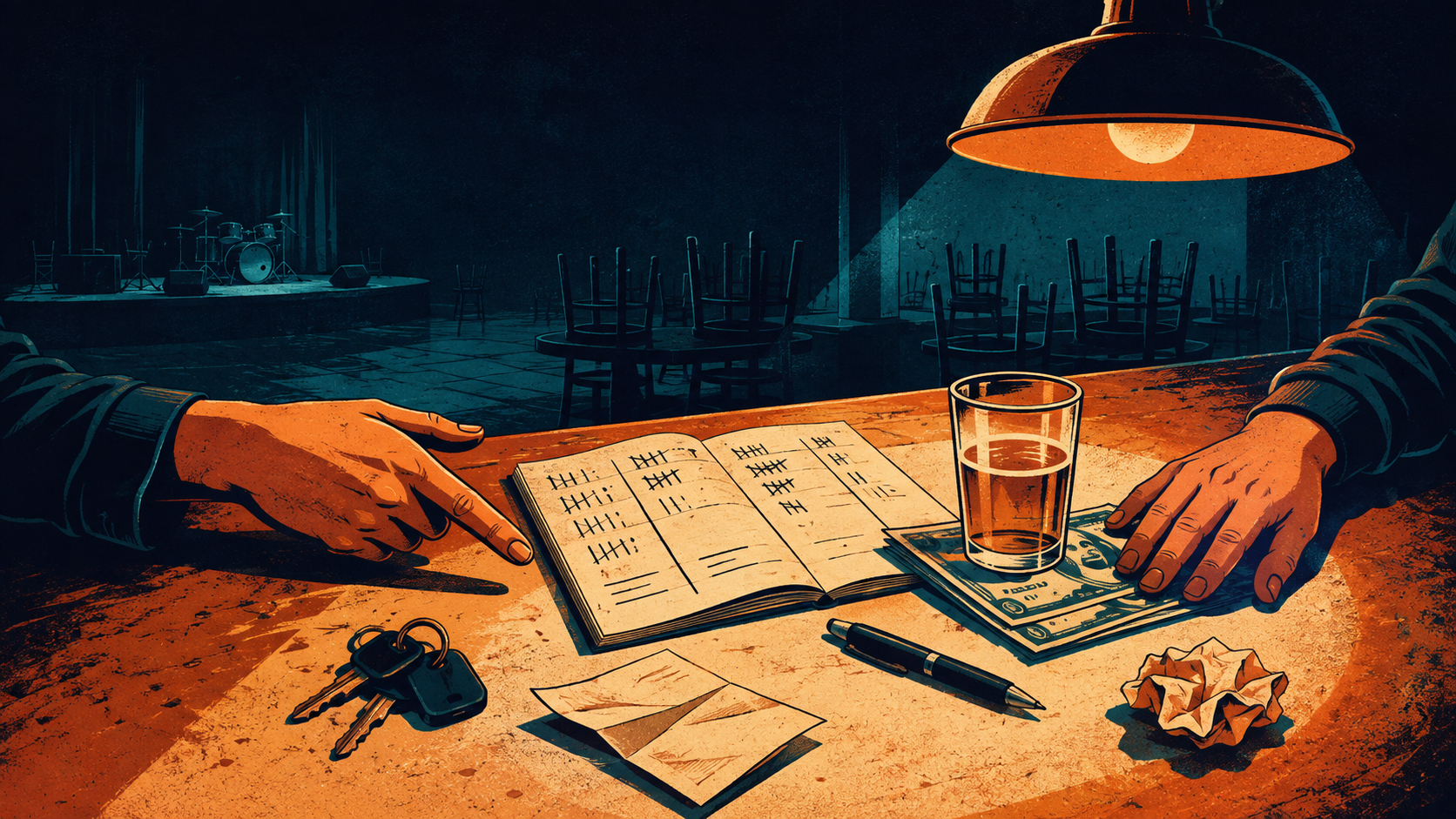
Most bands find out how a show pays about ten minutes after the show ends, standing at a bar, doing math with someone they just met. That is a bad time to learn what a settlement is.
None of this is complicated. It is just never explained. Here is the whole vocabulary.
Door deal
The simplest structure. The venue collects the cover charge at the door, and the bands get some share of it.
If the cover is ten dollars and 60 people pay, the door is 600 dollars. What happens next depends on the deal.
Straight door means the bands get all of it. Common at small bars where the venue makes its money on drinks and does not employ a sound engineer.
Split door means the venue keeps a percentage, often somewhere in the range of 10 to 30 percent, usually to cover a door person and sound. The rest goes to the bands.
Door after expenses means the venue takes its costs off the top first, then splits what is left. This is the one to watch, because "expenses" is doing a lot of work in that sentence. Ask what the expenses are and what they total before you agree. If the sound engineer costs 200 dollars and the door is 250, there is almost nothing left, and you should know that going in rather than finding out at settlement.
Guarantee
A flat amount the venue pays you regardless of how many people show up. Two hundred dollars is two hundred dollars whether the room is packed or empty.
Guarantees are lower risk for the band and higher risk for the venue, which is why venues only offer them to bands they believe will draw. For a new local act, a guarantee usually means a modest flat fee for an opening slot. That is a real and normal offer. Take it.
Versus deal
The most common structure once you are drawing consistently. You get the greater of a guarantee or a percentage of the door.
"200 versus 70 percent of the door" means: if 70 percent of the door is less than 200, you get 200. If it is more, you get the percentage. A slow night still covers gas and strings, and a big night actually pays.
If you are ever in a position to ask for one thing, ask for this.
Splits between bands
On a three-band local bill, the money that reaches the bands still has to be divided. Common approaches:
Even split. Everyone gets the same. Simple, fair-feeling, and the default on most local bills.
Weighted split. The headliner takes a larger share, often something like 50 / 30 / 20. Reasonable when the headliner is the reason most of the room is there.
Count at the door. Each band's fans say who they came for, and the money follows the count. Sounds fair, works badly in practice. Door staff get it wrong, people forget, and it creates arguments. Avoid unless the venue runs it themselves and does it well.
Whatever you use, agree on it before the show, in a message you can scroll back to. Almost every payment dispute in local music is a disagreement between bands, not between a band and a venue, and almost all of them come from nobody writing it down.
Terms you should know at settlement
Settlement is the conversation at the end of the night where you get paid. Ask who does it and when. If it is the manager and they leave at midnight, do not be loading out at 1am.
Bar minimum means the venue expects a certain amount of drink sales, and payment may depend on hitting it. Rare in the Twin Cities but it exists. Ask.
Backline is shared gear provided at the venue, usually drums and amps. If there is backline you load in less. Confirm exactly what is provided, because "there's a kit" sometimes means a kick and a snare.
Presale or ticket bundles mean each band is given tickets to sell and paid on what they sell. This is where things get uncomfortable.
The one thing to refuse
Pay to play. If you are asked to buy a block of tickets up front and sell them yourself, with the unsold ones coming out of your pocket, you are not being booked. You are being sold advertising, and you are carrying all the risk while the venue carries none.
Legitimate rooms do not do this. Some promoters in some markets do, and it targets new bands specifically because new bands do not know it is unusual. Say no. There are plenty of rooms in this metro that will book you on a normal deal.
The distinction is who eats the loss. If unsold tickets cost you money, walk. If you simply earn less on a slow night, that is just a door deal and it is fine.
What to actually ask for
Before you agree to a show, get four things in writing:
How you are paid. Guarantee, door, versus, and the exact percentage.
What comes off the top before the split, and roughly what it costs.
How the bands divide it and who decides.
Set length, set time, and load-in time.
That is it. Four questions, one message, and you have removed nearly every unpleasant surprise available to you.
Why we built offers into Gig Scout
Every problem in this post comes from the same source. Terms live in someone's memory or in a DM thread that scrolls away, and the two people involved remember them differently three weeks later.
The Gig Manager on Gig Scout Live makes the terms part of the booking itself. A venue sends an offer with the pay structure, set time, and expiration written into it. The band accepts, counters, or declines. When it is accepted, the confirmed gig appears on both calendars with the agreed terms attached to it.
Nobody has to remember what was said at a bar in June.